Avoid These Common Trailer Loading Mistakes (2025 Safety & Regulations Guide)
Posted on April 28, 2025
Top Trailer Sales, Repairs, and Supplies in Missouri
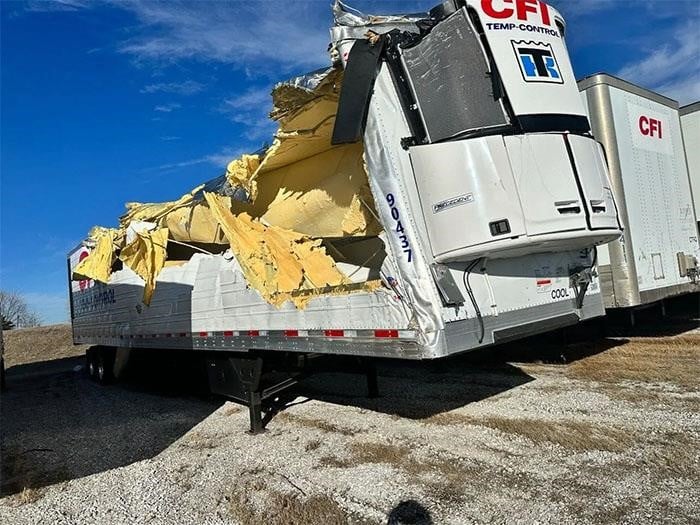
Whether you’re towing a small utility trailer for weekend projects or hauling heavy equipment cross-country, proper trailer loading is critical. Mistakes in loading or securing a trailer can lead to accidents, damage, and legal trouble. In fact, loose or improperly secured loads cause hundreds of deaths and thousands of injuries each year nhtsa.gov. The good news is that most trailer loading mishaps are preventable with the right techniques and knowledge. In this guide, we’ll highlight the most common trailer loading mistakes and how to avoid them, along with the latest 2025 Department of Transportation (DOT) regulations for safe loading and towing. At Monday Trailers, safety is our top priority – we want every driver (personal or commercial) to tow with confidence, knowing they’re following best practices.
- Overloading the Trailer Beyond Its Capacity - One of the most dangerous mistakes is simply putting too much weight on your trailer. Exceeding the trailer’s weight limit (or your tow vehicle’s capacity) can cause tire blowouts, axle damage, and loss of control gatormade.com. An overloaded trailer is harder to stop and may even collapse a suspension or hitch. How to avoid it: Always check the trailer’s Gross Vehicle Weight Rating (GVWR) and your vehicle’s towing capacity (including Gross Combined Weight Rating, GCWR) before loading. Weigh your cargo if possible, and never exceed the lowest weight limit (whether it’s the trailer, hitch, or tow vehicle limit). Remember that federal law caps heavy-duty truck combinations at 80,000 lbs GVW without special permits myteeproducts.com, and smaller trailers have much lower limits set by their design. If you’re approaching the weight limit, it’s safer to remove some cargo or take multiple trips than to risk overloading. Being overweight isn’t just unsafe – it’s also illegal and can result in hefty fines or liability in an accident.
- Poor Weight Distribution (Unbalanced Loading) - Even if you stay within weight limits, where you place that weight on the trailer matters tremendously. Loading a trailer too tail-heavy (too much weight in the rear) will cause the trailer to sway at highway speeds and potentially whip or jackknife uhaul.com. Conversely, putting too much weight at the very front can overload the hitch and rear of the tow vehicle gatormade.com. The ideal strategy is to load about 60% of the cargo weight toward the front half of the trailer and about 40% in the rear half uhaul.com. This helps maintain stability by placing an appropriate downward force on the hitch (known as tongue weight). As a rule of thumb, the tongue weight should be roughly 10–15% of the trailer’s total loaded weight curtmfg.com. This balance minimizes swaying and keeps the trailer tracking straight behind you. Additionally, distribute weight evenly side-to-side – an unbalanced load (heavier on one side) can increase the risk of trailer rollover during turns bulletproofhitches.com. How to avoid it: Place heavier items on the floor of the trailer, centered over or slightly forward of the axle(s). Secure them so they won’t shift. Then load lighter items around, keeping a roughly even left-right balance. If using a single-axle trailer, be especially mindful of not putting all weight behind the axle. For very heavy tongue loads, consider using a weight-distributing hitch to spread the load more evenly between the tow vehicle and trailer (this is often recommended for large RVs or trailers near the upper limit of your hitch capacity). Always consult your trailer’s manual for any specific loading instructions, and when in doubt, measure the tongue weight with a scale to ensure it’s in the safe 10–15% range.
- Insufficient Cargo Securement (Improper Tie-Downs) - Loading the trailer is only half the job – securing the load is equally important. Cargo that isn’t properly tied down can shift or fall off, endangering you and others on the road. In fact, all 50 states have laws requiring loads to be secured to prevent anything from dropping, shifting, or escaping from a moving vehicle nhtsa.gov. Failing to do so can result in fines up to $5,000, not to mention catastrophic accidents if debris hits another vehicle nhtsa.gov. Common mistakes include using too few tie-downs, relying on weak bungee cords, or simply not tightening straps enough. How to avoid it: Use the right tie-down equipment for your cargo. For heavy machinery or vehicles, use chains or heavy-duty ratchet straps; for lighter items, quality ratchet straps or ropes and cargo nets. Follow DOT-recommended guidelines for the number of tie-downs: for example, any piece of cargo over 10 feet long should be secured with at least two tie-downs (and more as length increases), and even shorter items over 1,100 lbs require a minimum of two tie-downs as well uscargocontrol.com. Cargo under 5 feet long and under 1,100 lbs can be held with one, but it’s often wise to use two for extra security uscargocontrol.com. Space tie-downs evenly along the load and ensure they are tight (but not crushing fragile cargo). If the load could slide, use wedges, chocks, or a front barrier. Cover loose materials like gravel or trash with a tarp or net so nothing blows out nhtsa.gov. After securing everything, double-check by tugging on the straps and asking: “Would anything move if I braked hard or hit a big bump?” nhtsa.gov. It’s also good practice to stop after the first 5–10 miles of driving to recheck and re-tension your tie-downs, as straps can settle or loosen with vibration.
- Using the Wrong or Mismatched Equipment - Another common mistake is improper hitching equipment or setup. An example is using a hitch ball of the wrong size or rating for the trailer – this is actually a frequent cause of trailer accidents weeklysafety.com. If the ball is smaller than the trailer coupler, the trailer can bounce loose; if the ball or hitch is not rated for the weight, it can shear off under load. Similarly, using a drop hitch that isn’t the correct height can lead to an unlevel trailer, affecting weight distribution and braking. How to avoid it: Match your hitch hardware correctly. Verify that the hitch ball diameter matches the trailer coupler (common sizes are 1-7/8", 2", or 2-5/16" – the trailer’s coupler should be labeled with the required size) weeklysafety.com. Ensure the hitch class and ball rating can handle the trailer’s gross weight weeklysafety.com – for example, don’t tow a 7,000 lb trailer on a Class II hitch rated for 3,500 lbs. Use a proper ball mount that keeps the trailer roughly level when attached to your vehicle (adjustable hitch mounts can help achieve this). Also, always attach safety chains in a crisscross under the tongue (crossing the chains forms a cradle to catch the trailer tongue if it ever pops off the hitch) weeklysafety.com. The chains should be slack enough to allow full turning, but not so loose that they drag on the ground. If your trailer has electric brakes, connect the breakaway cable to the tow vehicle – this safety device will activate the trailer brakes if the trailer disconnects. Skipping these steps or using the wrong gear can turn a minor issue into a major accident, so take the time to do it right. If you’re unsure, Monday Trailers can advise on the proper hitch and accessory setup for your specific trailer.
- Skipping Pre-Trip Safety Checks - Even experienced trailer owners can fall into a routine and forget critical safety checks before hitting the road. For instance, failing to check tire pressure and condition can lead to blowouts once the trailer is loaded. Not checking that all lights work (brake lights, turn signals, marker lights) means other drivers might not see your intentions, especially at night. A common oversight is forgetting to fully latch the coupler or insert the locking pin on the hitch – this can result in the trailer bouncing loose off the ball on the first big bump. How to avoid it: Develop a pre-tow checklist and walk around the rig every time. Verify the trailer is properly hitched: coupler locked, hitch pin secured, and safety chains attached. Inspect the tires on both the tow vehicle and trailer – set them to the recommended PSI (remember, tires may need higher pressure when carrying a load) weeklysafety.com bulletproofhitches.com. Ensure you have a spare tire and jack for the trailer. Check that all lights and electric brakes (if equipped) are functioning by testing the trailer’s connections bulletproofhitches.com. Adjust your mirror extensions if needed for a clear view down the trailer’s sides. Lastly, make sure the load is fully secure and that nothing is sticking out unsafely (if there is any overhanging cargo, flag it and follow local regulations for markers). Spending a few minutes on these checks can prevent disasters on the road. As the saying goes, “Don’t just hook up and go – hook up and know that everything is safe.
Regulations for trailer loading and towing are updated periodically, and it’s important to stay compliant with the latest rules as of 2025. Here are some key legal and safety requirements that all trailer users should know:
- Weight Limits and Size Restrictions: For commercial carriers, federal DOT limits the maximum Gross Vehicle Weight (GVW) of a truck-trailer combination to 80,000 lbs (40 tons) on interstate highways without a special permit myteeproducts.com. Additionally, most states cap single-axle loads at 20,000 lbs and tandem-axle groups at 34,000 lbs myteeproducts.com. These limits protect roads and ensure stability – and they apply to heavy-duty trailers and trucks. Oversized or overweight loads require permits and often additional safety measures (like escort vehicles or signage). For non-commercial trailers, your legal limit is generally whatever the manufacturer’s rating is (you must not exceed the GVWR on the trailer’s identification sticker, or the Gross Combined Weight Rating of your tow vehicle). Dimension limits also exist: most states set a max trailer width of 8.5 feet, height around 13.5–14 feet, and varying trailer length limits (often 40–53 feet) myteeproducts.com. Be mindful of these if you have an especially large trailer or load – exceeding them means you’re “oversize” and need permits and special routing.
- Trailer Brakes and Equipment Requirements: Braking laws for trailers are set by states, but a common rule of thumb is any trailer over 3,000 lbs loaded weight must have its own independent brake system worldpopulationreview.com. For example, Arizona requires trailers over 3,000 lbs to have functioning trailer brakes, a breakaway brake system, and safety chains by law worldpopulationreview.com. Some states have even lower thresholds (Idaho requires brakes on trailers over 1,500 lbs) worldpopulationreview.com. If your trailer is equipped with electric or surge brakes, ensure they’re in working order and properly adjusted to the load. Safety chains are required in virtually all states whenever you tow – these chains keep the trailer attached to the tow vehicle in case of hitch failure. Similarly, breakaway switches (which activate the trailer’s brakes if it detaches) are mandated for heavier trailers in many jurisdictions. Always use these devices; not only is it the law, but they can save lives in an emergency.
- Lighting and Signage: Trailers must have proper lighting – tail lights, brake lights, turn signals, side marker lights, and reflectors – as specified by federal standards (FMVSS) and state laws. If you’re towing at night or in low visibility, these lights are critical. Also, any load that extends a significant distance beyond the trailer (generally 4 feet or more past the rear) must be marked with flags or lights according to state regulations weeklysafety.com Oversize loads (wider or taller than standard) require visible “Oversize Load” banners and often flashing beacons. Keep in mind that if you’re hauling something very large or heavy for commercial purposes, additional DOT rules kick in – like special permits, route restrictions, and potentially hours-of-service rules for the driver. For most personal and light-commercial trailer users, staying within legal size and weight, and ensuring your trailer lights and reflectors are in place, will keep you compliant.
- Cargo Securement Rules: The DOT (through the Federal Motor Carrier Safety Regulations) has detailed cargo securement standards for commercial transport – and these set a good benchmark for everyone. All cargo must be secured to withstand acceleration, braking, and cornering forces so that it cannot shift or fall off uscargocontrol.com. As mentioned earlier, there are specific requirements on the minimum number of tie-downs based on cargo length and weight (e.g. at least one tie-down for small items, two or more for longer/heavier items) uscargocontrol.com. As of 2025, these rules remain in effect and are enforced during roadside inspections. Even if you’re not a commercial trucker, you could be held liable if items fall off your trailer. Bottom line: legally, you must secure your load. Use straps, chains, and binders that are in good condition (no cuts or excessive wear), and don’t forget to secure equipment like ramps or spare tires on the trailer itself. If you’re ever unsure, refer to 49 CFR Part 393 (the federal cargo securement regulations) for guidance – or ask our team at Monday Trailers for advice on safe tie-down practices.
- State-Specific Towing Laws: Beyond federal rules, always be aware of the state laws wherever you are operating. These can include lower speed limits for vehicles towing trailers, lane restrictions (some states prohibit trailers from the far left lane on highways), and requirements such as trailer inspection stickers. For example, some states limit towing speed to 55 mph on certain highways, even if the posted limit is higher. While we won’t list every state’s rules here, it’s wise to review the towing regulations for your home state (and any states you’ll drive through on a trip). The DOT and state DMVs often publish towing guides that outline these details in plain language.
Trailer loading might seem straightforward, but taking the time to do it correctly makes all the difference. By avoiding these common mistakes – not overloading, keeping your load balanced, securing everything properly, using the right equipment, and performing safety checks – you drastically reduce the risk of accidents on the road. It also keeps you on the right side of the law, as you’ll be meeting the latest 2025 DOT regulations for trailer safety. At Monday Trailers, we pride ourselves on being a knowledgeable and trusted provider for all your trailer needs. We’re here to help with expert advice, quality equipment, and support so you can focus on the road ahead. Happy and safe towing!
Sources: Proper loading and securement techniques: uhaul.com, gatormade.com;
Weight distribution guidelines: curtmfg.com, bulletproofhitches.com;
Trailer loading safety tips: gatormade.com, weeklysafety.com;
DOT cargo securement rules and state laws: uscargocontrol.com, worldpopulationreview.com;
National load safety statistics: nhtsa.gov.
Return to All Blogs
